
Turning 70—and Turning Upside Down: One Patient’s Journey to a Shoulder Comeback
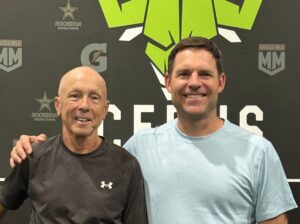
Steve Versoi (left) and Dr. Lucas Schnell (right)
For Steve Versoi, staying active has always been a way of life. Whether playing softball, baseball, or basketball—or taking on hiking, biking, running, and HIIT exercises—Versoi has rarely slowed down.
But when pain and stiffness in his right shoulder progressively worsened, even routine movement became difficult.
“It just kept tightening and tightening until I could eventually hardly raise my arm,” Versoi recalled.
Versoi had previously experienced a frozen shoulder and knew how significantly shoulder problems could affect his mobility. When the new pain persisted, his primary care provider recommended Dr. Lucas Schnell, orthopedic surgeon and shoulder specialist at Orthopaedic & Spine Center of the Rockies (OCR). Versoi already knew and trusted Dr. Schnell, who had previously treated a knee injury he sustained while playing soccer.
“He’s a great guy—thorough and a great communicator,” Versoi said. “He’s kind and easy to like.”
Dr. Schnell diagnosed Versoi with a rotator cuff tendon tear. The rotator cuff is a group of muscles and tendons that help move and stabilize the shoulder. A tear occurs when one or more of those tendons detach from the bone.
According to Dr. Schnell, “rotator cuff tears often develop gradually as inflammation and small tendon tears progress over time. Patients commonly experience pain during activity, weakness when lifting the arm, limited motion, nighttime pain or popping in the shoulder.” Without treatment, the tear may become larger and lead to chronic pain and weakness.
To help Versoi, Dr. Schnell performed an arthroscopic rotator cuff repair on Versoi’s right shoulder. During this minimally invasive procedure, the surgeon works through several small incisions and uses specialized instruments to place anchors into the bone. Sutures attached to the anchors secure the torn tendon against the bone while it heals.
Versoi appreciated that the procedure could be performed arthroscopically instead of through a larger incision.
Following surgery, Versoi completed several months of physical therapy. Within about three weeks, he returned to the gym with temporary limitations and a careful approach to movement.
Today, Versoi says his shoulder is doing “amazing.” He has experienced no ongoing problems and is once again hiking, running, lifting weights and attending HIIT workouts five to six days each week.
“Rotator cuff repair is a very successful procedure that can restore shoulder function and eliminate pain,” he said. “It does, however, take patience and compliance from the patient—and a strong partnership between the surgeon and patient—to achieve a great outcome.”
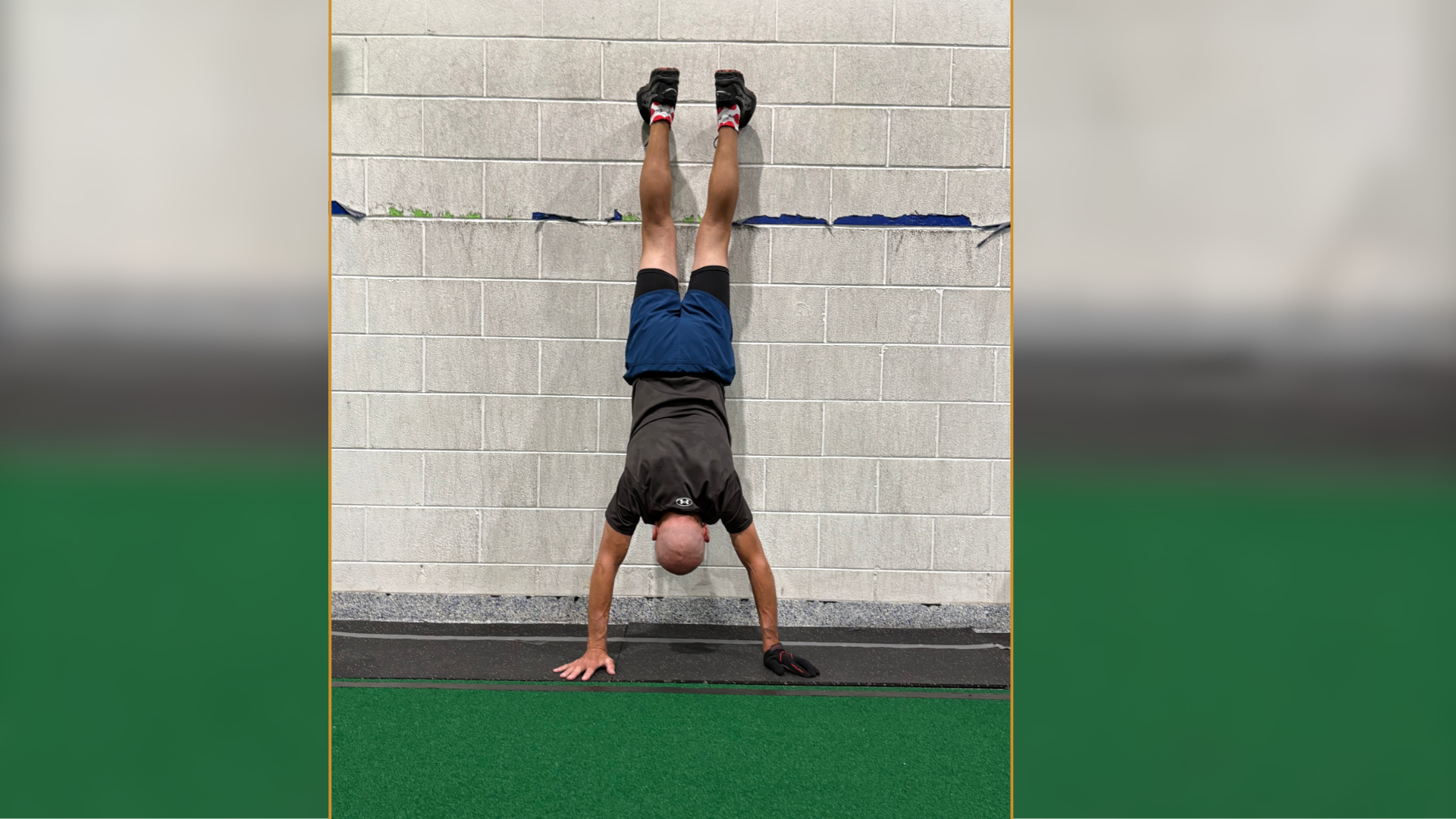
 Dr. Schnell emphasized that successful recovery requires teamwork. For Versoi and Dr. Schnell, that teamwork extends beyond the exam room and into the weight room. The two regularly work out together, sharing a commitment to staying active. Their time in the gym offers Dr. Schnell a firsthand look at Versoi’s recovery—and his return to the challenging workouts he loves. Turning 70 this year, Versoi is still taking on “wall walks”—a challenging exercise that requires upper-body strength to walk his feet up a wall while moving his hands toward it, finishing in a wall-supported handstand.
As Versoi turns 70, every handstand is a reminder of how far he’s come—from struggling to raise his arm to trusting his repaired shoulder to help turn his world upside down.