
Recognizing OCR Veterans
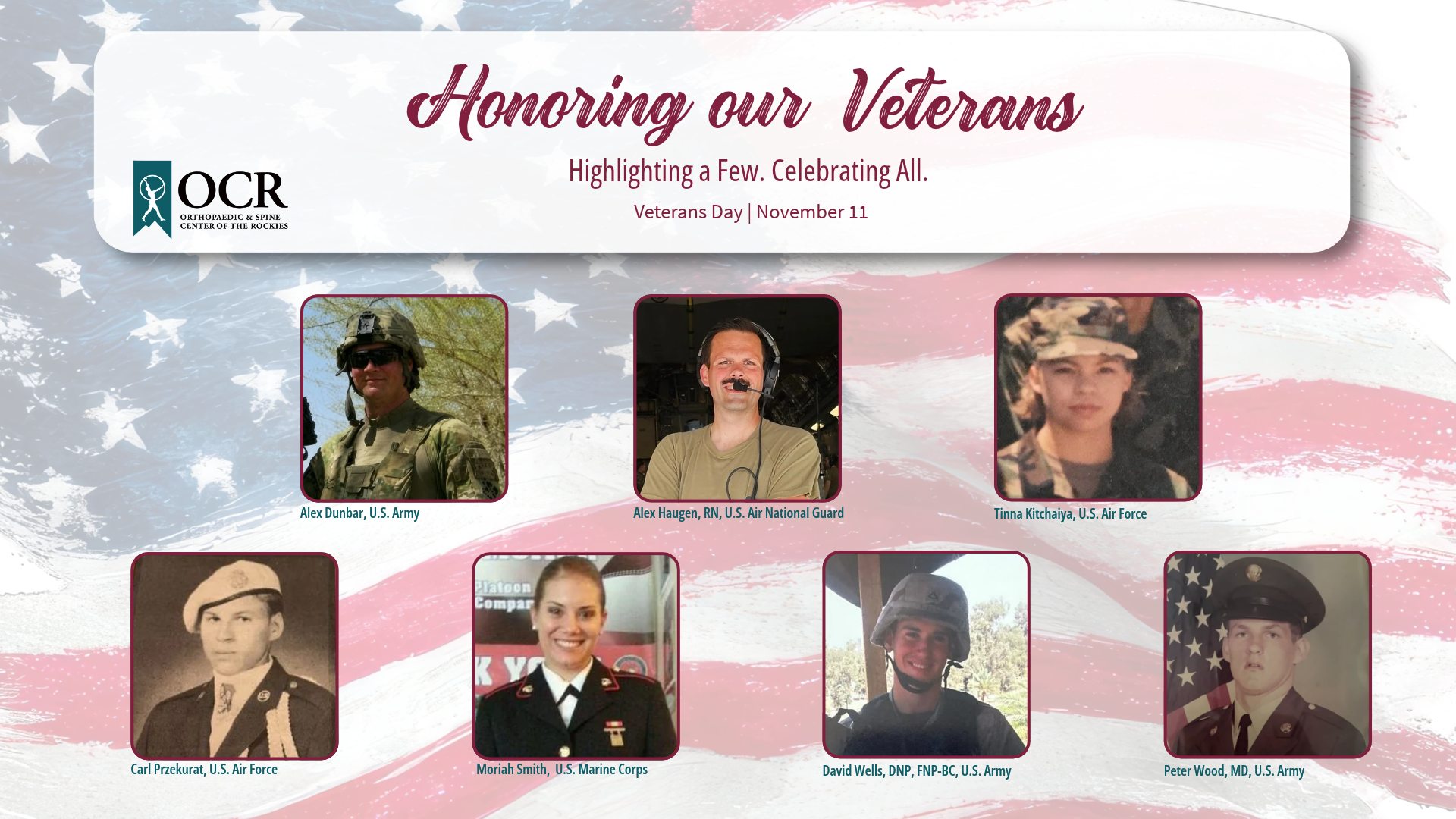
This Veterans Day, Orthopaedic & Spine Center of the Rockies (OCR) is honored to spotlight a few members of the OCR team who have served in the U.S. military. Their service represents a meaningful commitment to our country and the freedoms we share. We’re thankful for their dedication and sacrifices, and proud to share their stories while acknowledging their contributions.
Alex Dunbar, U.S. Army
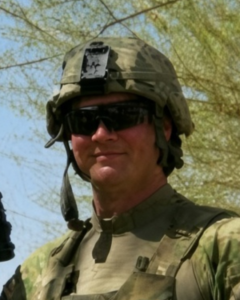
Alex Dunbar, U.S. Army
Alex Dunbar, an OCR scrub technician, served in the Army as an infantryman. He was stationed at Fort Carson in Colorado Springs and deployed to Afghanistan in 2010 to 2011 for Operation Enduring Freedom. While on deployment, Dunbar was stationed in the Arghandab River Valley, working with locals to develop local police and help stabilize the region.
“The military showed me what true leadership is,” said Dunbar. “It’s truly the small things, or helping carry the load, that makes caring for others easier than expected.”
Dunbar shared that while he initially joined the military because he felt he needed to, he later became grateful to his squad leaders. Throughout his service, he learned that there is more than one way to approach a challenge, and that different perspectives help identify a solution.
Alex Haugen, RN, U.S. Air National Guard
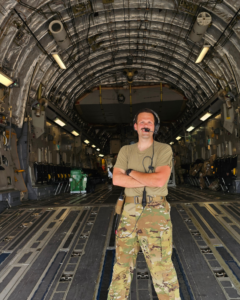
Alex Haugen, RN, U.S. Air National Guard
Joining the Air Force was a lifelong dream for OCR operating room nurse, Alex Haugen, RN. As a flight nurse with the Wyoming Air National Guard, Haugen helped rescue and transport wounded and ill service members around the world. The Air Force carries out these medical transport missions for every branch of the military.
Of all the work that came with the role, Haugen takes the most pride in caring for wounded service members and reuniting families who might otherwise have missed the chance to see their loved ones again.
Haugen says that officer training school sharpened his leadership and communication skills. “Being in forward locations improved my nursing skills and my ability to work in less-than-ideal situations with limited supplies,” he said. Those lessons in teamwork, resourcefulness and patient care continue to shape how he continues his work at OCR.
Looking back on military service, Haugen said he is most grateful for the support of his wife who stood by them while he was away.
Christinna Kitchaiya, U.S. Air Force
Tinna Kitchaiya, U.S. Air Forc
Christinna (Tinna) Kitchaiya, an OCR phlebotomist, served for six years in the Air Force, primarily working as a medical lab technician where she was responsible for running biological test samples. Kitchaiya’s parents were in the military which led her to begin her own military career at the age of 17.
During her time in the military, she developed an ability to be flexible, adapting and thinking critically under pressure. “I learned what teamwork and leadership should and should not look like,” she said. In addition to her time spent in the lab, her interactions with her fellow servicemembers have translated to her position of working with others at OCR. “I’m thankful for learning how to make anything happen,” she said.
Carl Przekurat, U.S. Air Force
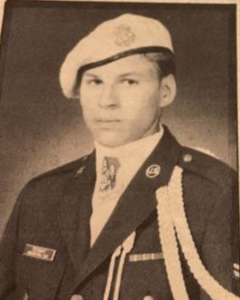
Carl Przekurat, U.S. Air Force
OCR’s facilities manager, Carl Przekurat, served in the U.S. Air Force for over 21 years as a Human Resources Manager, serving three tours in Europe, including time spent in the Netherlands, Germany, and Italy. During these tours, he was primarily assigned to work directly with the North Atlantic Treaty Organization’s (NATO’s) multinational units.
Przekurat comes from a family with a history of military service, where his father and several uncles set an example. He explains that his motivation for joining the military originally stemmed from a desire to “serve and protect the peace and security of this great country we live in,” he said. While serving, he never missed a single day of assigned duty and credits a great deal of luck involved in not getting sick or injured during those years.
Przekurat said he is most proud of serving alongside other servicemen and women, particularly those he trained at both Colorado State University and Iowa State University. “Because my last name is long/difficult – everyone referred to me as MSgt P, or Sgt P,” he said. Several of the cadets he trained went on to pursue military careers, many who have now served in all corners of the world. “The camaraderie was incredible,” he explained, adding that this sentiment has carried into his career and work at OCR.
Moriah Smith, U.S. Marine Corps
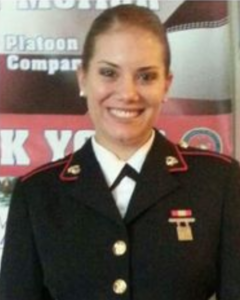
Moriah Smith, U.S. Marine Corps
Moriah Smith, an OCR sports medical assistant, served in the Marine Corps as a military police officer. Smith spent her years of service at several military bases and camps around the country, including her first duty station, the Marine Corps Base Hawaii in Kaneohe Bay on Oahu. Her time in the military later took her through more than ten states, exposing her to the vast cultural differences across the U.S.
Serving in the military helped Smith develop resilience, saying she adopted a “sense of independence and strength to stay sturdy and thriving in an environment that is meant to feel challenging,” particularly in a male-dominated field. Her motivation to serve and help protect others led her to initially join the military, which naturally led to a later career in healthcare at OCR. ” My desire to help and protect others transferred naturally to healthcare, where I can serve with compassion,” she said. “I strive to see everyone equally and approach them with peace, compassion, and a willingness to help.”
Smith credits her staff sergeant and drill instructor with inspiring her to become a strong and confident female Marine. Through this leadership, she learned patience and received support and guidance that eventually led her to where she is today.
David Wells, U.S. Army
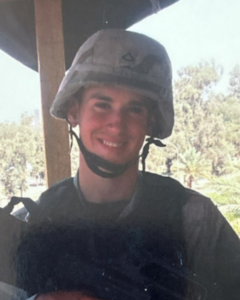
David Wells, U.S. Army
David Wells, DNP, FNP-BC, a nurse practitioner specializing in hand and upper extremity care, served in the U.S. Army and the Wyoming National Guard. While serving, he was predominantly working stateside as an artilleryman and did a tour in Iraq from spring 2004 – spring 2005. While deployed, he trained as military police and assisted with security details.
Wells comes from a long family history of military members and is proud to carry on the tradition, share his experiences, and explain the meaning of serving with his children. His family provided a great deal of support for him during this time, and he is quick to credit them for supporting his journey and decision to enlist.
Beyond continuing his family tradition, Wells directly benefited from the continuing education that military service provided. “Serving allowed me to have most of my college (both undergraduate and graduate studies) paid for,” he said.
Wells describes how his military experience taught him several lessons that carried into his civilian life and his work as an NP. “We all have our role in providing excellent and safe patient care, and helping people through pain and injury,” he said. “You have trust that your fellow service members are going to be dependable and able to perform their duty.”
Peter Wood, MD, U.S. Army
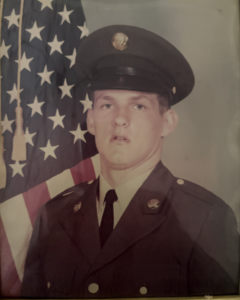
Peter Wood, MD, U.S. Army
Peter Wood, MD, a sports medicine physician at OCR, first joined the U.S. Army at 18, just two months after the Vietnam War ended. While enlisted, he served in the Special Forces (Green Berets) as a radio operator, carrying the radio in the field and sending encrypted Morse code messages back to base.
Wood, a Southern California native, trained in the southeastern U.S. and later spent the rest of his time at a post in Bavaria, Germany, a site over thirty years previously was used in World War II to train Nazi SS officers, ”bit of a spooky place,” he describes it. While there, he learned Morse Code, how to use a radio, how to parachute, and how to ski, and faced plenty of physical challenges.
Reflecting on his time in the military, he said he is most proud that he endured the physical and mental challenges of a young man at the ripe age of 18. “I was the youngest on our team and took a lot of flak for it,” he said. ” Jumping out of a moving helicopter at 2 AM into a huge lake in Germany without a parachute was a defining moment.”
Wood came from his time in the military with a stronger sense of discipline and recognized the importance of teamwork; both skill sets and characteristics that have parlayed into his role as a physician at OCR. “Both traits helped me immensely during my training over the years as well as during my time spent here at OCR,” he said.
He said he is most thankful for the opportunity to redirect his life and develop new skills that eventually led him to medicine. “I enjoy my role as a caregiver and wouldn’t trade it for anything.”